

Do not hesitate to read the scars
that crater the textual body!
~ Avital Ronell
My maternal grandfather had eczema — him, I’d never met.
I’d like to think this might have been his way of writing onto me: after all, he was the one who composed poems, wrote poetry; something that I’ve never yet quite admitted to wanting to be able to do, to make, to bring into the world.
Ever since I’ve started writing, making what I consider writing, I’ve been writhing in my skin.
Literally.
Eczema and writing are indivorceable to me.
Wouldn’t this mother tongue
be a sort of second skin you wear on yourself,
a mobile home?
~ Jacques Derrida
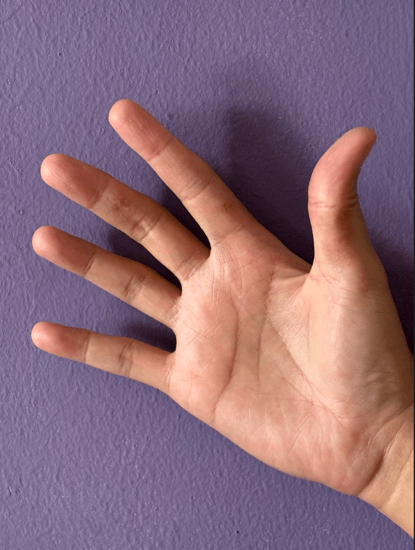
My skin tells me where my body is, what a body be; especially when it splits, particularly when it bleeds.
Reminding me at the point when it opens — opening me to myself at the point of its opening. Before which, I had only known it in theory; but now as theoria, it stages itself on me, to me.
Where, it is quite possible that, as Céline Coderey, our dear dear Caelina, tries to never let me forget in a reminder which may well have come from the skies (caelum), ‘itchiness might well be skin writing — where what you, all you, have to do is to not so much listen to it, but let it write. Where you are writhing, it is writing’.
I believed that I wanted to be a poet,
but deep down I wanted to be a poem
~ Enrique Vila-Matas
Bearing in mind — even as it might well be, become, remain, a burden, a continual weight on me — carrying a reminder from my dear teacher, the late great reader thinker Jean-Luc Nancy, remembering his difficult reminder that ‘the difference between rape and sex is that in the latter, there is no penetration, no wounding, no breaking of skin’: the skin-between, a threshold, maintaining the radical alterity of both, of all, sustaining the very possibility of otherness. Bringing with it the question, the impossible challenge, of how one might be able to respond to the thoughts, words, text of another — Jean-Luc’s in this instance; but also the ideas, notions, images, opened by and through my friends’ drawings, photographs, sketches, thoughts, writings, works, words, worlds — how to let it, how to let them, write upon me, as I am writhing to it, without appropriating it, taking it for my own, being rapacious with it. For, one is always running the risk of seizing it, plagiarising it, pilfering it, taking over, taking it as one’s own; even if, even as, perhaps especially if, one is attempting not to.
I want words to be like stains
you cannot tear yourself away from.
~ Annie Ernaux
Where, one is potentially turning what should be a scene of hospitality into a kidnapping, transforming the one who should be your guest into a hostage, even whilst you are trying to be responsible.
Oftentimes, precisely when one is attempting to respond to another: for here, we should try not to forget that any attempt to understand another, to comprehend the other, always also brings with it echoes of taking, seizing, prendre — where one potentially, quite possibly, subsumes the other under one’s self, places another under one’s stance … and where the very skin-between is ruptured.
Ellipsis is the rhetorical equivalent of writing: it depletes, or de-completes, the whole so as to make conceptual totalities possible. And yet every conceivable whole achieved on the basis of ellipsis is stamped with the mark of the original loss. Ellipsis eclipses (itself). It is the “figure” of figuration: the area no figure contains.
~ Werner Hamacher
And where, not only does the space between one and the other disappear but where there is no longer any other.
This being the inherent risk of trying to, the risk in attempting to, reach out to another, to call out to — read, write on — the works of others, in citing another.
Especially the ones you love.
To desire — it is to listen to one’s body and the voice of one’s body,
giving it the freedom to cry out, to express its anger, its revolt, or its love.
~ Adonis
…
Jeremy Fernando reads, writes, and makes things. His most recent work, Jeremy Fernando by Jeremy Fernando can be found here: https://www.delerepress.com/books/jeremyfernando
 RIC Journal
Leave a comment