

She looked at her watch. It was time, nearly evening, and she was late. She hurried down the street. Her day had been long, relentless and there were still things to be done. Sometimes, she thought, she wanted to stop knowing, or rather measuring her list of things to do, things done, things she was in the middle of doing: the work at the psychiatric hospital, patients, writing her books, workshops, classes to prepare, events, and her children, the cat, her parents, the house, her partner, her friends and the house. There were so many things that if you put them in a line, or tried to weigh them, or take a tape measure and see how far they stretched, it was like they defied the hours in the day. Recently, a man had told her: ‘Eat the frog’: do the thing you want to do least first. But the frog thing, a time management technique, just seemed like another thing to do: Imagine eating a leaping frog. All of these things and thoughts filled her up, pushed their way inside her. They made her feel bigger and bigger, inflating her body with an uncomfortable invisible enormousness.
She stopped and opened a shop door. A bell rang. Inside, white shelves were stacked with perfumes and creams. Lipsticks and powders. The scent was strong. Lights bright. By a cash desk, two women said ‘Hello’.
‘I have an appointment. Sorry I’m late,’ she said.
One of the women, a beautician, indicated she could go through. Inside, a second room the lights were dimmed. Pale grey walls were decorated with framed photographs, pebbles patterned with age-old mineral lines. They always had these things in spas and hairdressers, the woman thought, the stones never jagged or broken, as though in these rooms people needed to feel whole, connected geologically. In the centre of the room was a treatment bed covered in a disposable paper sheet, a fresh white, folded towel. Music played. There was the sound of waves.
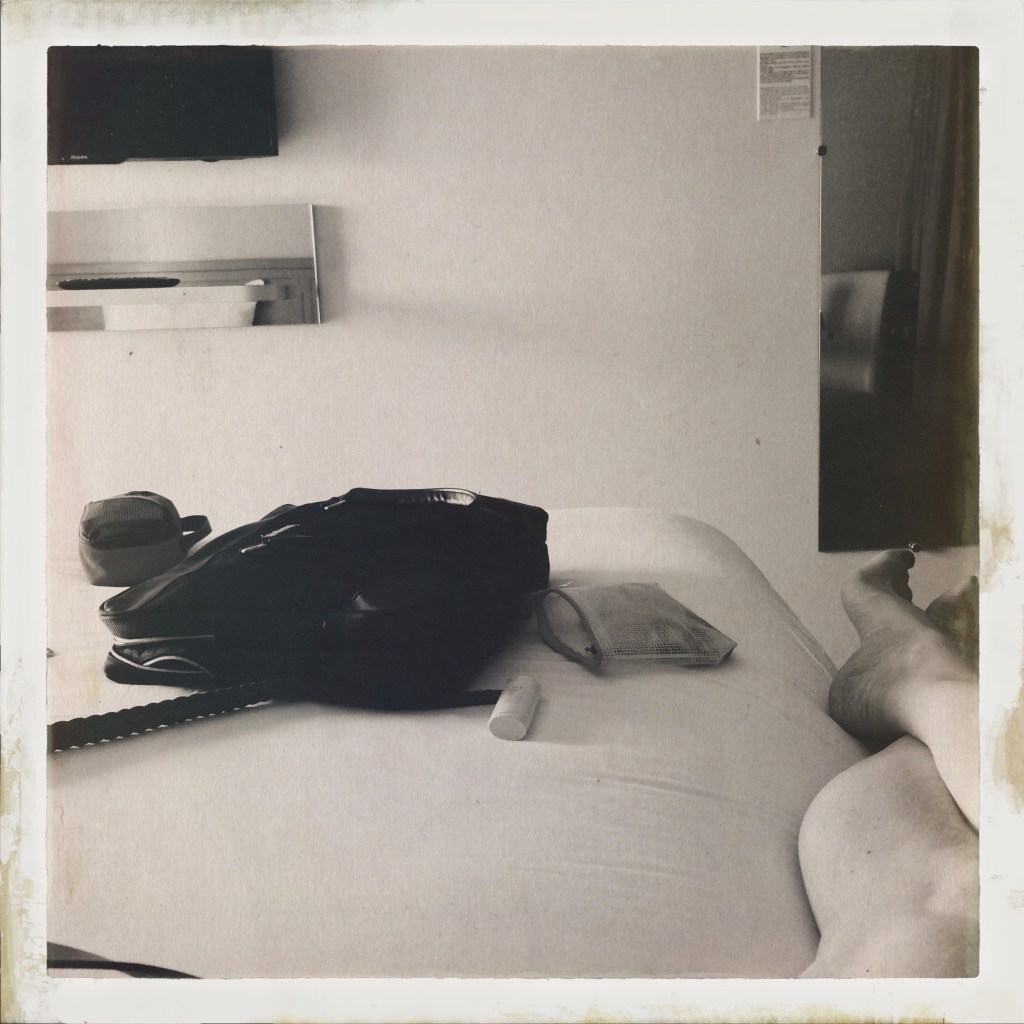
The room was small. Perhaps like a nest, the woman thought. By a chair, she took off her coat, shoes, tights and trousers. Having checked her phone, she stretched out on the bed, suddenly vulnerable, half-naked. Yet, her body sank into the disposable sheet, and it was odd this feeling. Rare. Her muscles imperceptibly loosening. Tiny tight strings relaxed, became less taut, a letting go, as though some of the things and thoughts could fade as she waited. The house, the patients, the books began to dissolve. Her limbs slackened. If she focused on breathing it helped, and she had talked to patients about this, the centring, the breath: relaxation. Yet, it was difficult to describe this feeling because it was inside her, invisible. It was not evidence-based, not as easy to study as other things humans did like standing up, completing tasks, weeping or taking pills.
The beautician knocked, popped her head round the door ‘Are you ready?’
The woman nodded. They knew each other now. At the beginning of each appointment, they chatted about the weather, the house the beautician wanted to buy, the real estate market, the woman’s daughters, the beautician’s holidays. Once the beautician had described the panic attacks she had suffered from when she was student: ‘I couldn’t breathe’, she’d said. Another time, they had broached the subject of what it was like to take care of bodies, touching people throughout the day.
‘It can be exhausting’ they agreed.
While they talked, the beautician prepared the wax. The smell of it melting floated in the air. At a certain moment, the talking always stopped as though the beautician and the woman both knew. The wax was ready, had gone from hard to soft, and the woman would become silent. She didn’t want to think anymore. When it was quiet, something entered the room. It could. A stillness. A breath. Between the beautician and the woman, it was an unsaid agreement: the sound of waves.
Next, the beautician took a palette knife, scooped up hot wax and scraped it onto the woman’s calves. The woman felt the blade’s edge, a thin coating of hot wax on her skin. Heat like the sun. Her muscles relaxed. Oddly unburdened. ‘The skin was the largest sense organ of the body’, the woman taught this in lecture halls: ‘Skin is 15% of body weight.’ The world outside entered through skin: the hard knife and the hot wax. The skin sensed things, sending messages from synapses to brain. Connections and sensations. The beautician waited, placed a paper strip over the wax on the leg. The heel of her hand moved down the length of the shin pressing the paper into the woman’s skin and hair. The beautician’s touch was firm, steady and then rapidly, she pulled the paper. It was a tear, a rip, and the woman’s skin prickled, suddenly hairless, bare. Smooth.
At this moment, the woman thought, it was like she was shrinking. The taking away, that had begun when she lay on the bed, increased. Things left her body instead of being added. She could stop in the pale grey room, withdraw. Things and thoughts disappeared. They were removed with the hot wax, the paper, hair and touch. The waves. It was as though life became the right size, fitted inside her skin, and she wished it could last. This balance between outer and inner states. The beautician continued spreading wax, pressing down paper, and tearing. First the front of the calves. Then each side, then the knees. The order was always the same. Reliable. When the beautician did the knees she asked the woman to bend her legs and the wax was spread over the curve of bone.
Next, the beautician asked the woman to turn over. She lay on her stomach on the disposable sheet. The music played. Her face in the towel. It was rough on her skin, and she smelt lavender washing detergent. She longed to sleep, and now felt the beautician apply hot wax to the back of her calves, place the paper, press down and then pull. It was her favorite part of the appointment. For a few seconds she experienced a foreverness and wished it would never end. She would stay and sleep on the treatment bed, the woman thought, as things were added and removed. Someone else would take care of her as she was done, undone, and in the process of doing.
But then, all of a sudden, her legs were bare of hair, and there was nothing left to take. Instead, the beautician asked, ‘Do you want cream or oil?’ She answered ‘Oil’, and the beautician massaged her legs. They began talking again and the beautician told the woman that the favorite part of her job was removing hair and that there was something about it to do with perfection and getting things done.
Then the beautician told the woman she had finished. ‘You can get up whenever you like.’
She left the room and the woman lay for a moment in silence, knowing it would soon be over. The things and the thoughts would start again. She got up and put on her tights, trousers, shoes and coat. There was the sound of the waves. She checked her phone, beneath her trousers and tights, she felt her legs tingle. Opening the door, she glanced at the pebbles. The music still played. The woman returned to the bright shop to pay. She smiled at the beautician, thanked her and walked out into the street. The bell rang. She looked at her watch. It was time.
…
Susanna Crossman is an essayist and award-winning fiction writer. Her acclaimed memoir, Home is Where We Start: Growing Up In The Fallout of The Utopian Dream, was published by Fig Tree, Penguin, in 2024 and will be published by Heliotrope Books (US) in 2026. Her new novel, The Orange Notebooks, was out in 2025 (Bluemoose Books, UK and Assembly Press, NA). She has recent work in Aeon, The Guardian, Paris Review, Vogue, Neue Rundschau and more. A published novelist in France, she regularly collaborates with artists. When she’s not writing, she works on three continents as a mentor, lecturer and clinical arts-therapist. Born in the UK, Susanna Crossman grew up in an international commune and now lives in France with her partner and three daughters.
 RIC Journal
Leave a comment